
Some extra details about the subject of this video.
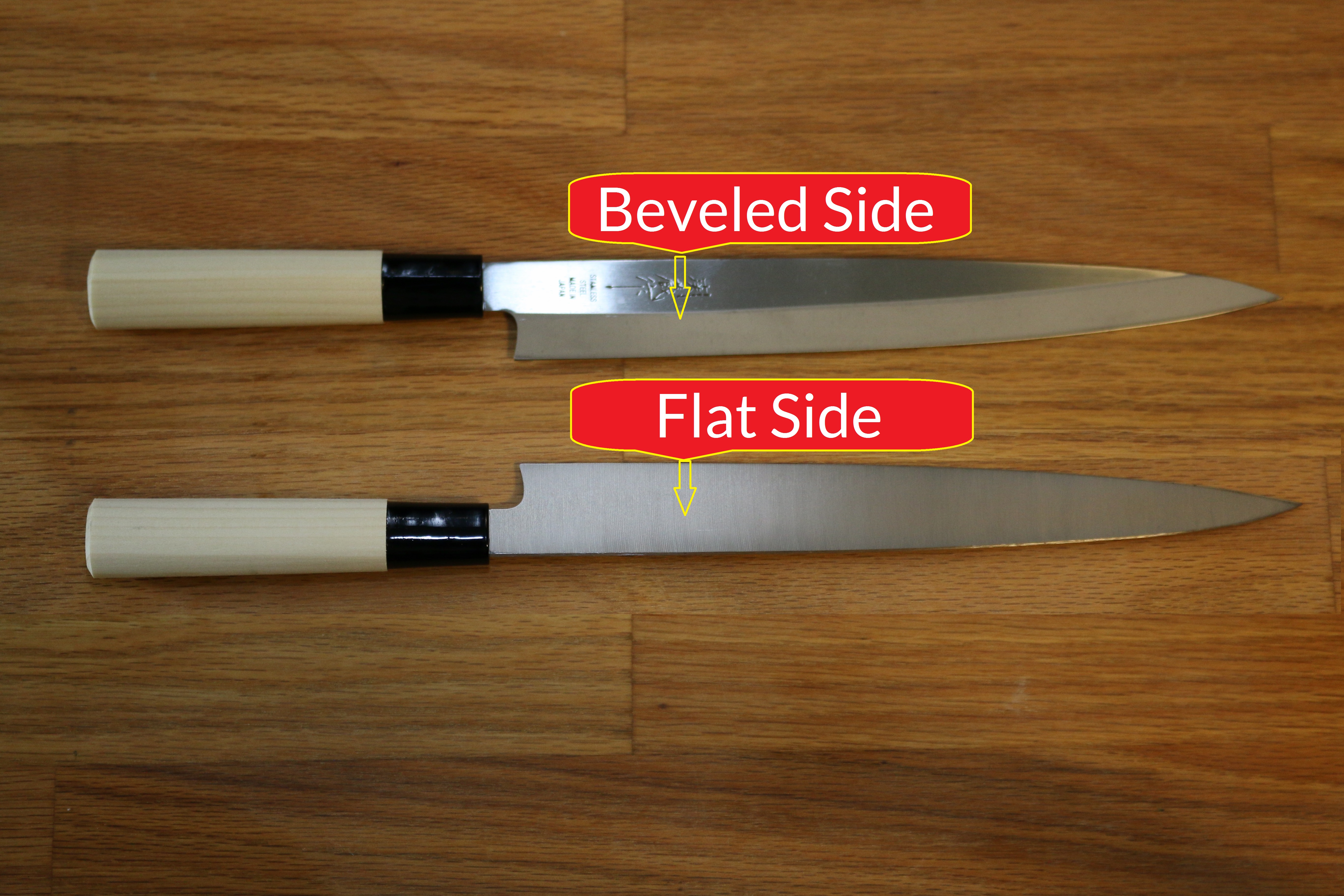
First of all consider that there are knives which are sharpened on one side only as I said in the video. The following picture shows a knife that has these characteristics.
When sharpening we have to make sure to do it in the primary edge of the knife avoiding going over the secondary edge of the knife.
Consider the following picture.
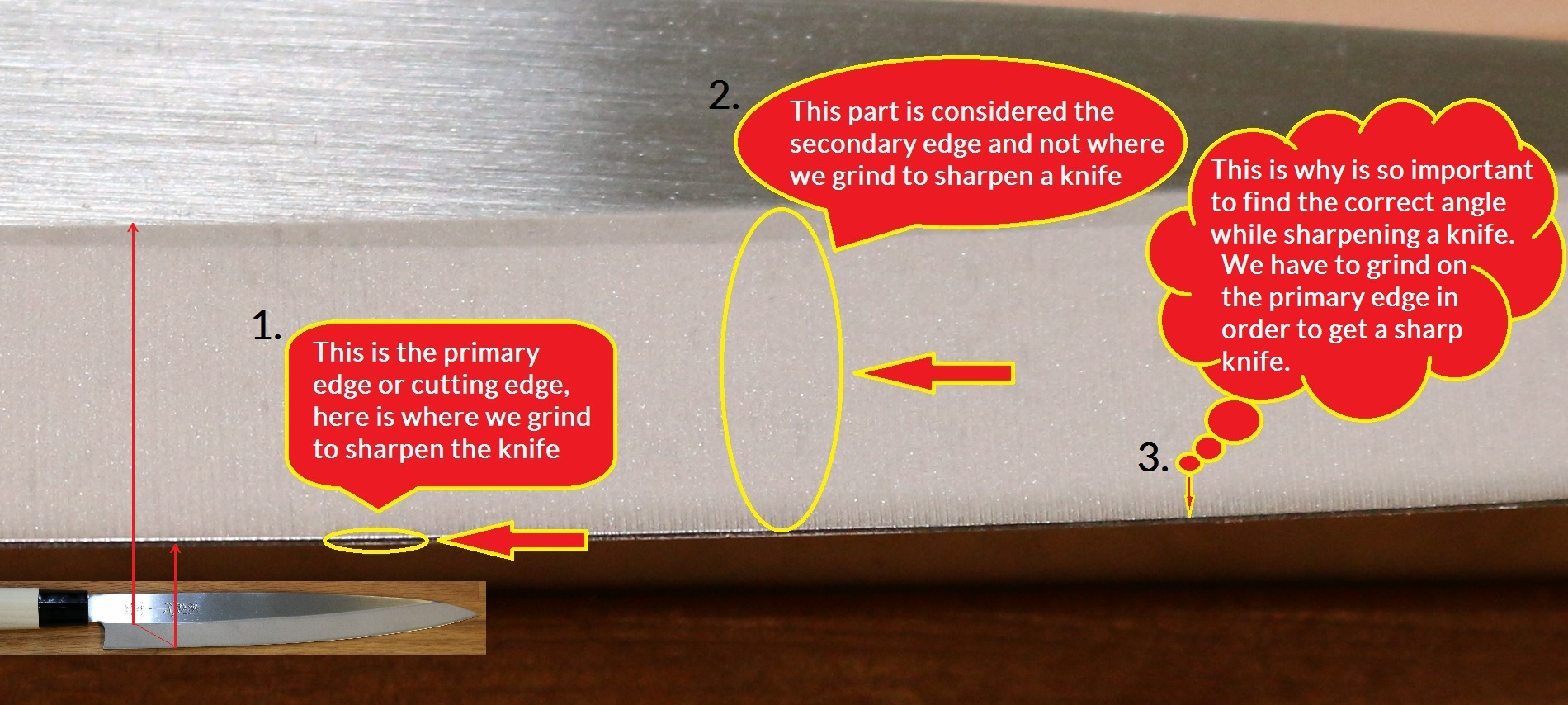
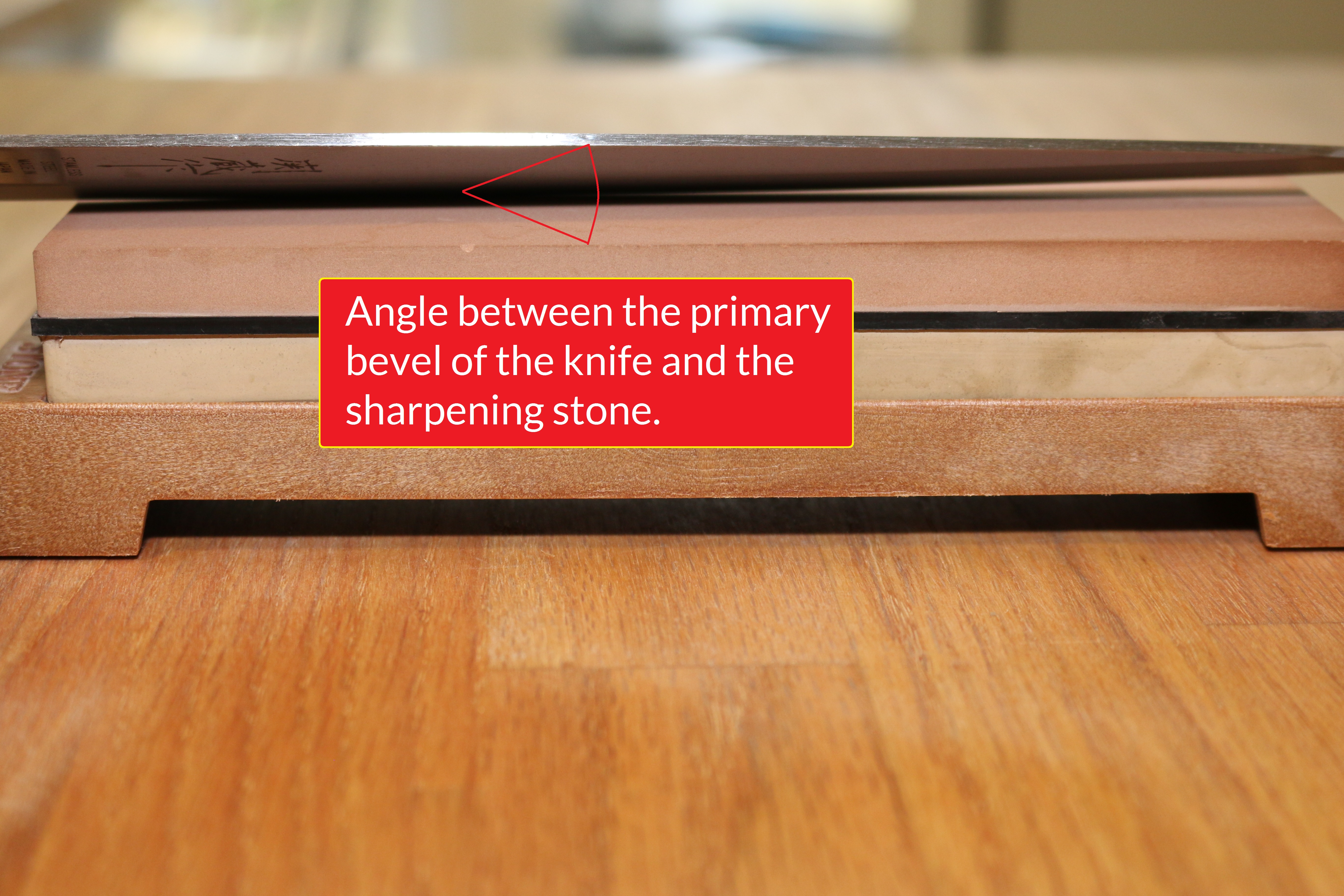
This is why the angle used to sharpen your knife is so important and it is directly connected with the final result. The angle for sharpening knives usually fluctuates between 10 degrees to 25 degrees more or less. There is no method for determining exactly which angle we should use and this is something we must learn by practicing and observing. Today there are guides available to help with this aspect; I will leave an example at the end of this page.
Consider this picture in terms of the sharpening angle in relation to the stone.
In this short video I share a technique to determine if you are applying the correct angle. The idea is to use a marker on the knife’s edge and from this manner determine if we are grinding on the right place. The marker’s ink is erased in the areas where it is sanded, this is used to determine if we have to increase or decrease the angle we are using.
There is one last detail about Japanese stones I didn’t mention in the video, the use of a Nagura stone. See picture below.
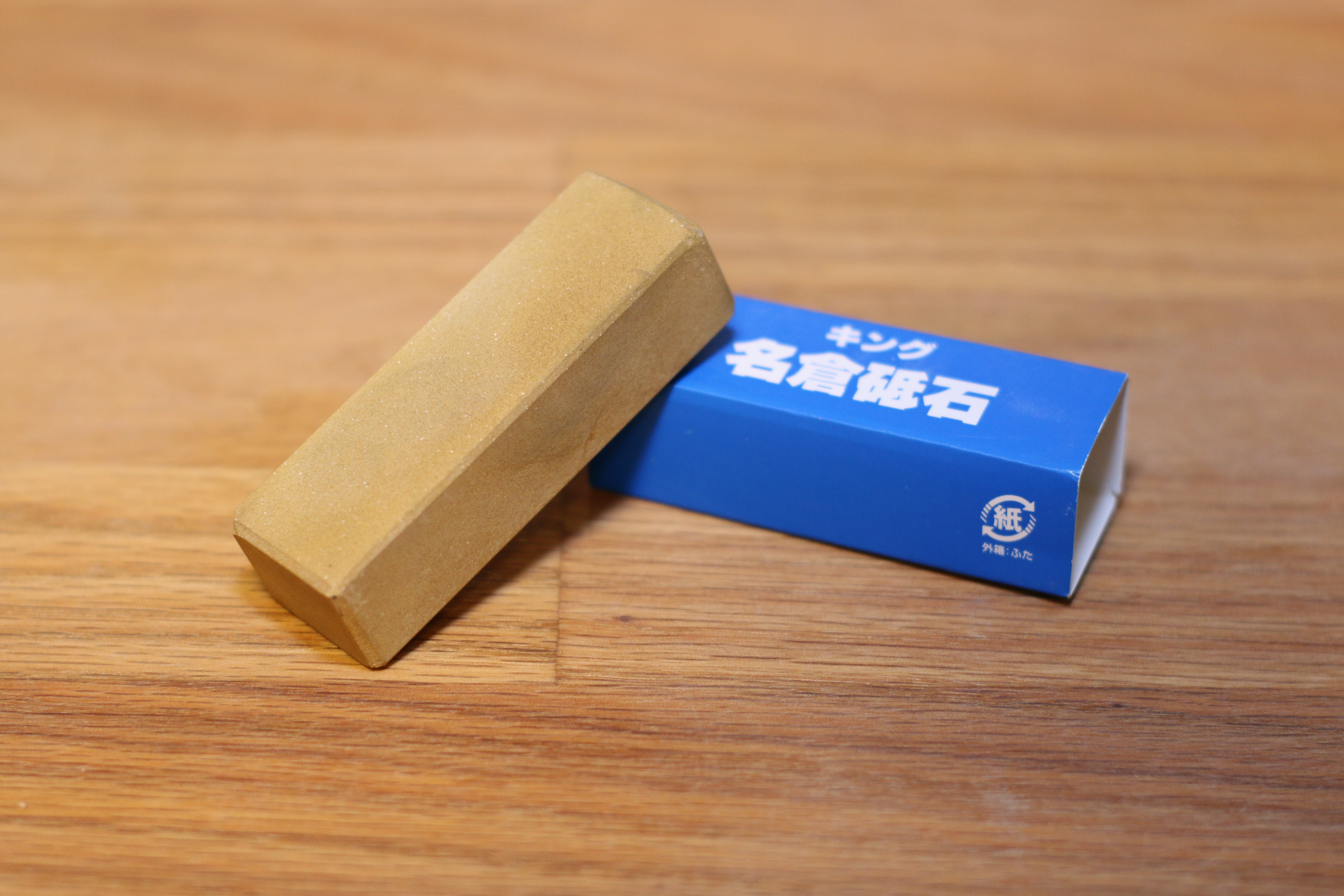
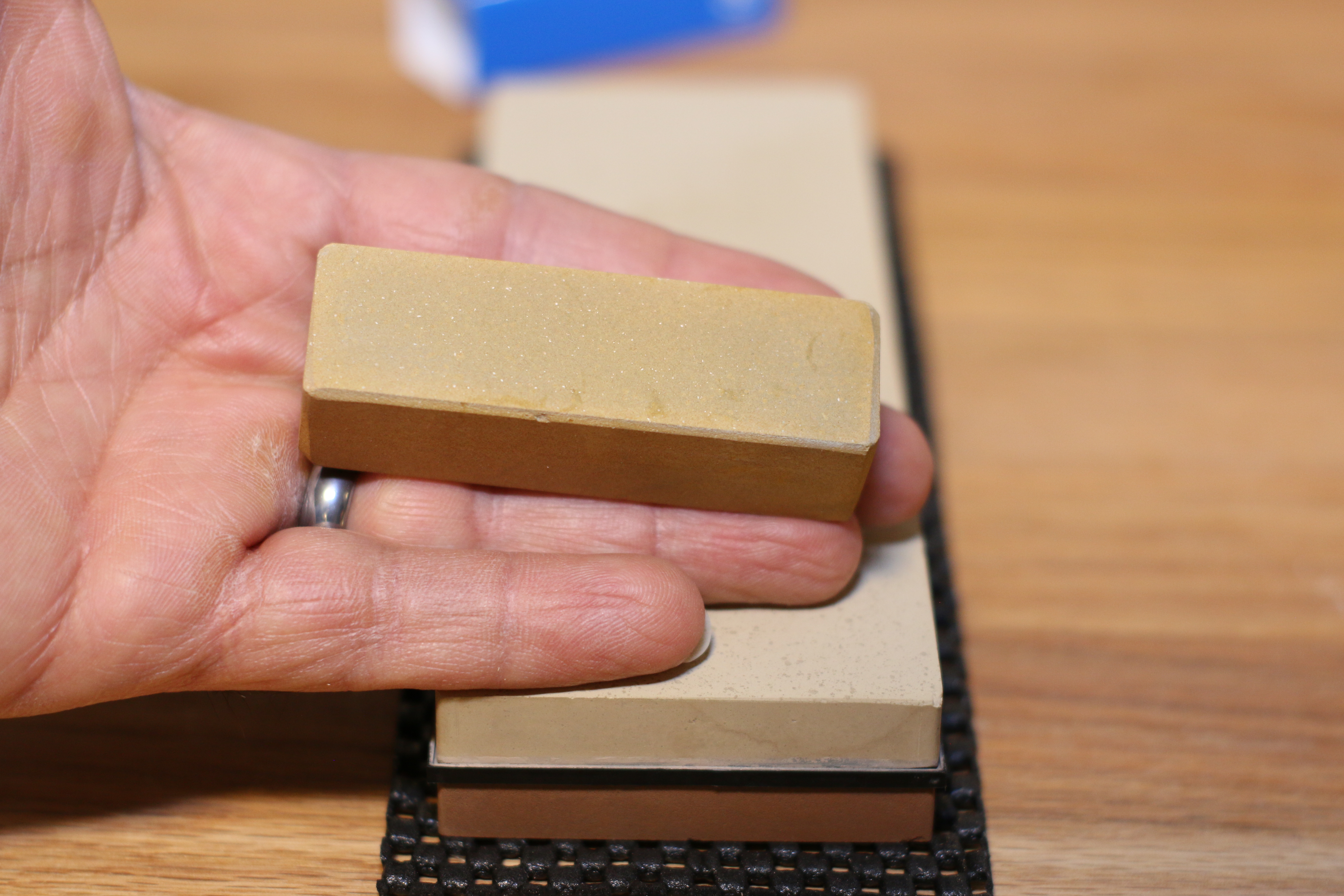
In a nutshell the Nagura stone is a small watertstone used to condition natural stones. There are two main reasons to use a Nagura stone. One is to remove metal particles from a natural stone and the second one is to create slurry which is said to aid in the polishing process. Simply put the Nagura stone is a very small stone used to clean a larger natural stone. In the process of rubbing the Nagura stone to clean the larger natural stone slurry occurs which is recommended not to be washed away and leave on the stone to aid when polishing a knife. The Nagura stones are commonly used to clean very fine grit natural finishing stones like 6,000/8,000/10,000 grit stones and in most cases Nagura stones need to be matched with the natural stone. Meaning that there are specific Nagura stones recommended for certain natural stones depending on their grit number.
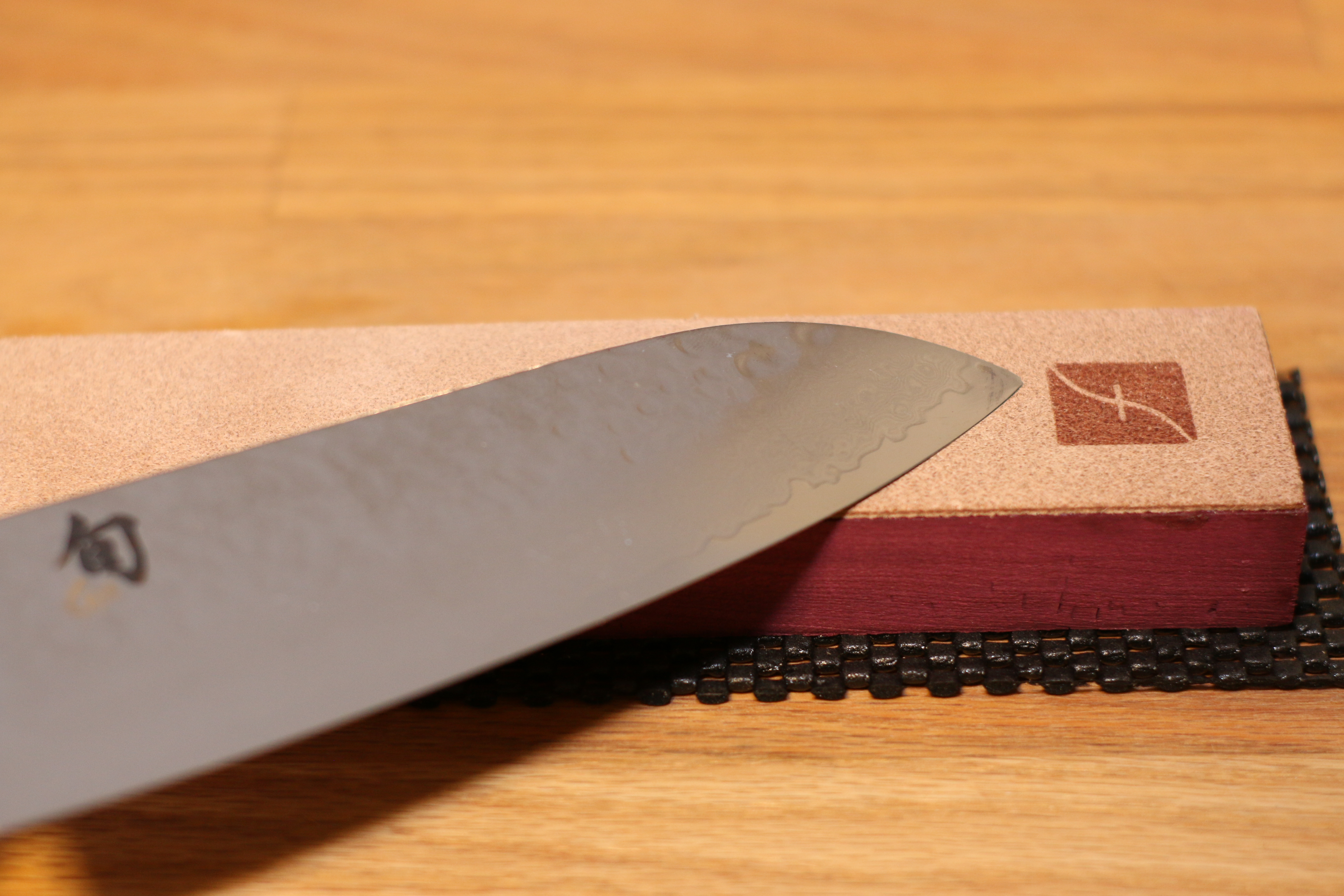
There is one last step that is optional but recommended by many, stropping. The step consist of using a leather belt and rub the knife’s blade (in the opposite direction of the edge not to damage the leather) in a way similar to the method I used to sharpen the knife.
Below is one of the stropping blocks I use which is hand made in Texas and comes with everything in the picture.
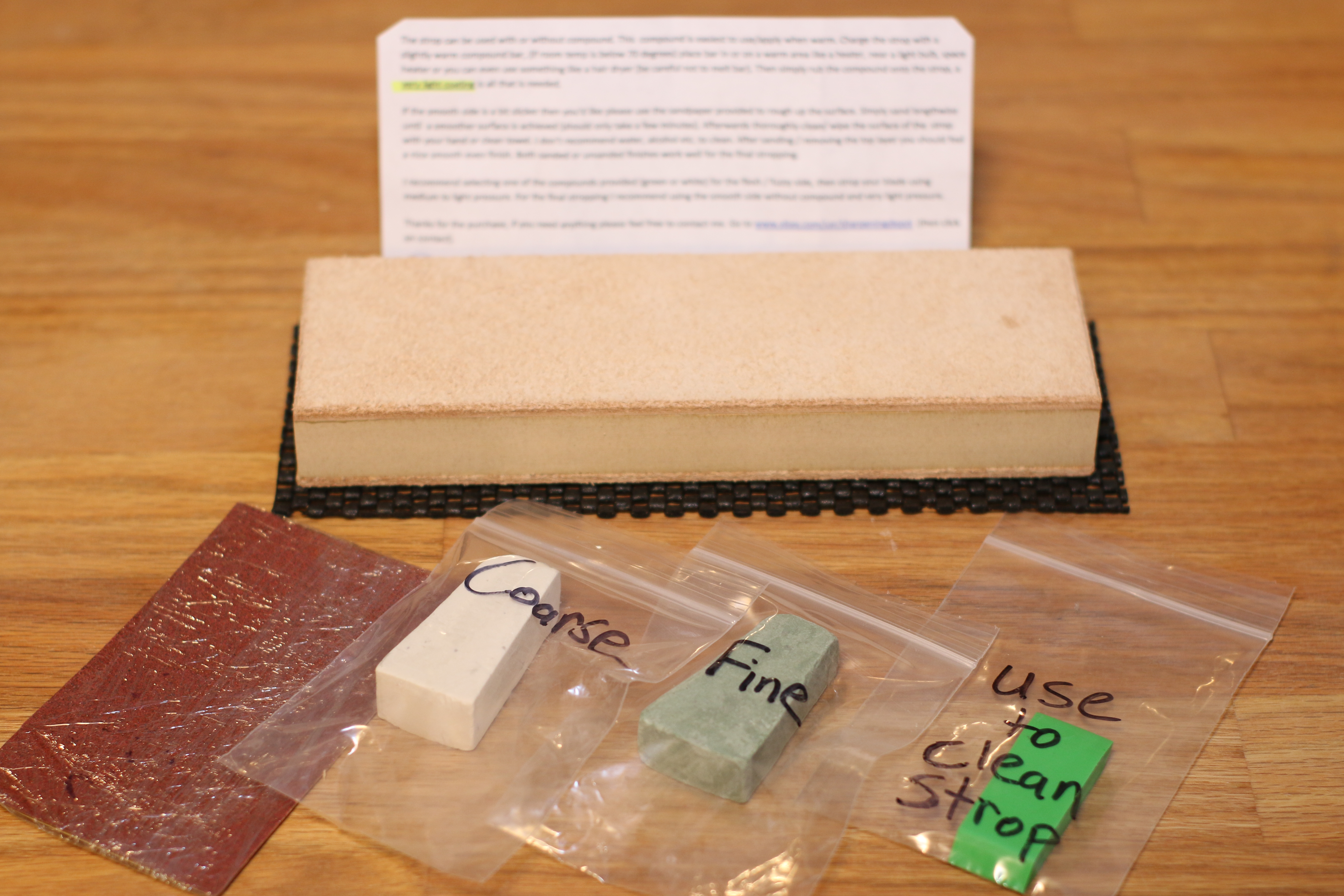
This stropping block features a rough side and a smooth side as seen in the picture below.

This is another of the stropping blocks I have used that only features one leather side instead of two as the one on the picture above.
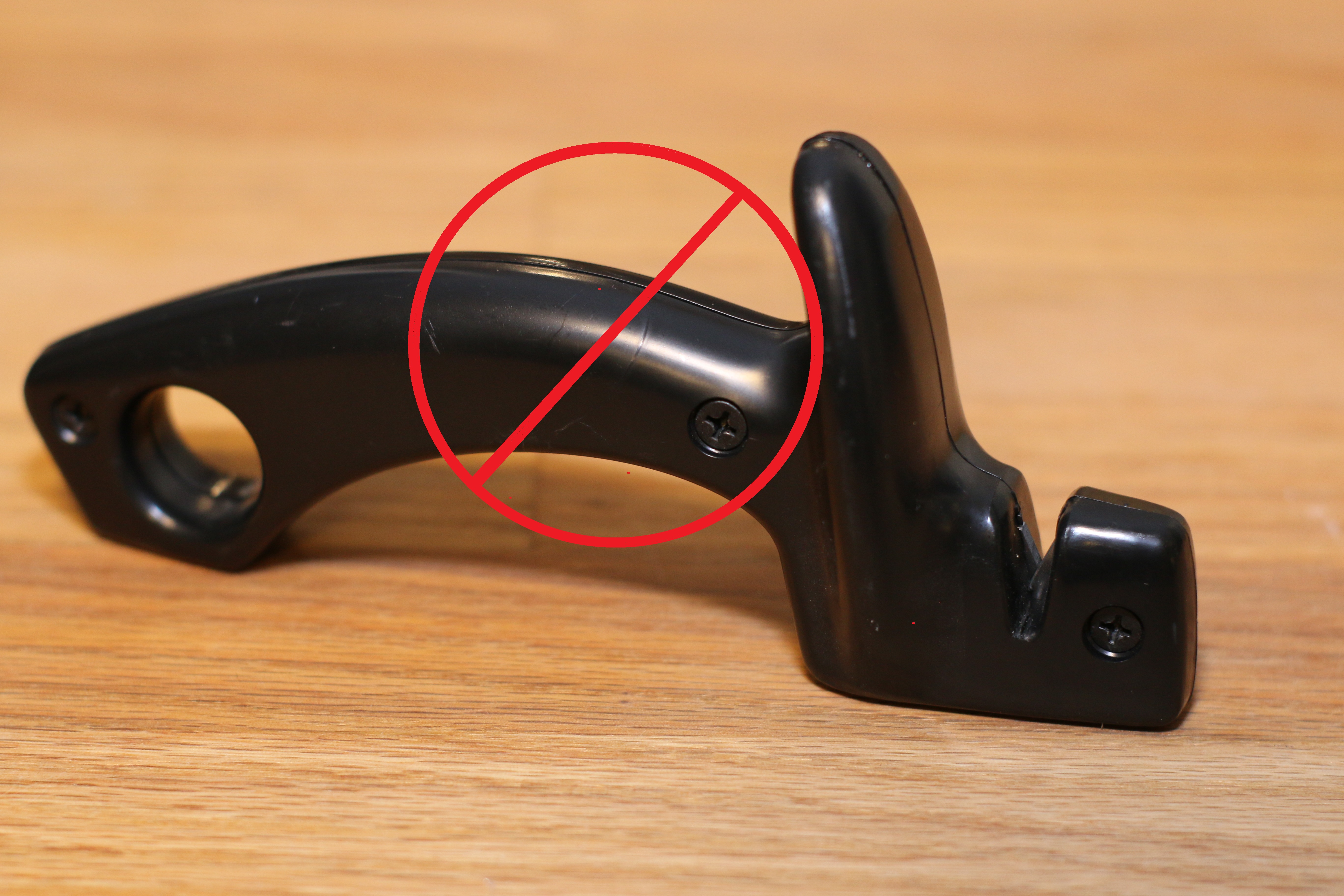
I strongly suggest to never use a tool like the one in the picture below to sharpen your knives, this is what I personally call “A Knife Terminator”.
Finally, I would like to comment on how often you should sharpen your knives by using a stone. My recommendation is that for a knife that is only used once a week or less it can be sharpened once a year with stone and using a steel in between uses to maintain the edge. A knife that is used several times a week can be sharpened using a stone every six months or so and with the use of a steel in between uses to maintain the edge. Finally a knife that is used every day can be sharpened with a stone once every three to six months with the use of a steel in between uses.
These are my personal recommendations but in the end there are many variables that can affect the edge of your knives. Among these we can consider the surface where the knife is being used (wood, plastic etc …), what are we cutting with the knife (vegetables, meats etc …), what type of cuts are we doing ( chop, slice) and finally we have to consider the material of the knife itself.
Today there are many different metals used for the construction of knives and these metals vary in hardness. The harder the metal is the longer the knife should maintain its edge without needing to be sharpened. However the harder the metal the more difficult to sharpen the knife will be. Also the harder the metal is the more prone it is to fracture. A knife made of softer metal is sharpened more easy but likewise loses its edge easily too; it does not tend to fracture as easy as the hardest metal. The hardness of the metal is measured by the Rockwell scale where the larger the number the harder the metal is. The most common scales in metals used to make knives fluctuate between 56 to 62, again these are common figures but you can find higher or lower numbers.